Battery passports, live before February 2027
Every EV battery, LMT battery and rechargeable industrial battery over 2 kWh placed on the EU market needs a passport and a QR code from 18 February 2027. The date is fixed in the regulation. The data behind it lives across your whole supply chain.
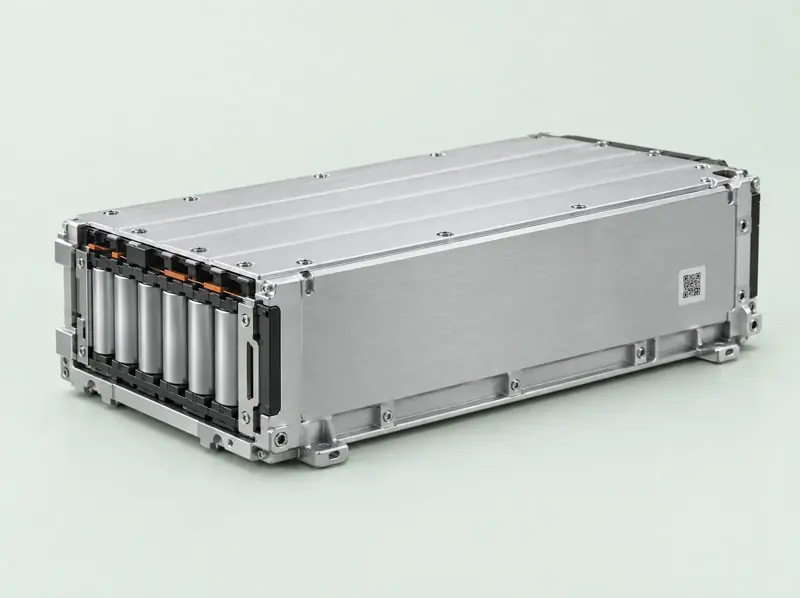 Chemistry · NMC 811
Recycled cobalt · 12 %
Carbon footprint · per kWh
State of health · 97 %
Six groups of data, three levels of access
Annex XIII of the regulation sets the content. Some of it is public, some only for people with a legitimate interest such as repairers and recyclers, and some only for authorities.
General information
- Manufacturer and unique battery identifierPublic
- Category, model and weightPublic
- Date and place of manufacturePublic
- Labelling and conformity informationPublic
Carbon footprint
- Carbon footprint per kWh over the life cyclePublic
- Performance classPublic
- Link to the supporting studyPublic
Materials & composition
- Chemistry and critical raw materialsPublic
- Hazardous substancesPublic
- Detailed compositionLegit. interest
Circularity
- Recycled and renewable contentPublic
- Dismantling and removal informationLegit. interest
- Spare parts sourcesLegit. interest
- Safety measuresLegit. interest
Performance & durability
- Rated capacity, voltage and powerPublic
- Expected lifetime and round-trip efficiencyPublic
- State of health, updated in useLegit. interest
Due diligence
- Supply chain due diligence reportPublic
- Third-party verificationAuthorities
- Test reports proving complianceAuthorities
Most of it starts several tiers upstream
Recycled cobalt is declared by the cathode supplier, capacity is measured in a lab, the batch link lives in your MES. DPP Hub pulls each value from the source that has the authority for it.
Built for the parts of the battery passport that are hard
Annex XIII data model
Ready-made model aligned with the Commission's data-point guidance, configured to your battery categories.
Carbon footprint workflow
Collect and trace the inputs now, so you can declare as soon as the calculation methodology act is adopted.
Recycled content evidence
Keep, link or calculate supplier values at the right scope, with the evidence and method attached.
Life in the field
Update state of health from BMS data through the API, ready for repair, second life and recycling.
What a recycler sees, and what a consumer doesn't
Switch between views. Detailed composition, dismantling steps and state of health stay with people who have a legitimate interest. Test reports stay with authorities.
Most general obligations of Regulation (EU) 2023/1542
Plus user-replaceable portable batteries in appliances
Postponed by Regulation (EU) 2025/1561
Industrial over 2 kWh, EV and starter batteries
16% cobalt, 85% lead, 6% lithium, 6% nickel
Verified · registered
One battery model live, end to end, well before the deadline
Data model, supplier requests, identifiers and a public passport for one product line. Then we scale.